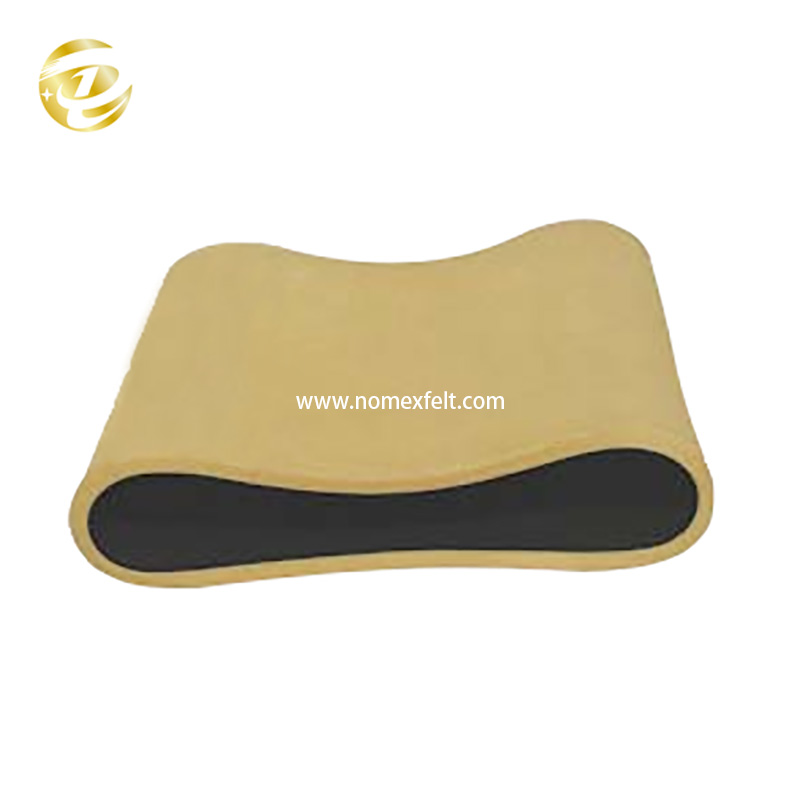
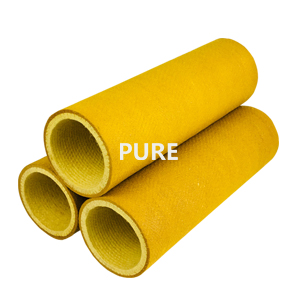
Compactor Felt is a vital material used in textile finishing, particularly in the pre-shrinking process. It is applied in compaction machines to control fabric shrinkage, ensuring dimensional stability and preventing excessive shrinkage during washing. Compactor felt is an endless needled felt, which consists of Nomex, polyester, and wool.
The primary function of Textile compactor Felt is to apply controlled shrinkage to the fabric during the compaction process, which is typically the last finishing step after relaxation or drying.
When the fabric is pre-shrunk by the pre-shrinking blanket, some moisture is removed through pre-drying. After exiting the machine, it is dried and ironed by a tension-free blanket dryer to eliminate wrinkles caused by excessive shrinkage during compression, thereby achieving a full hand feel and soft luster.
Mechanical pre-shrinking treatment involves using a compressible rubber blanket to carry the fabric for pre-shrinking.
During pre-shrinking, the fabric—usually with a certain level of moisture—runs tightly against this rubber blanket. It passes through what we call the compression zone, moving from the stretched outer arc into the contracted inner arc. In simple terms, it goes from tension to compression within a very short distance.
Because the fabric is clamped between the rubber blanket and the pressure rollers, it can’t slip. That’s key. As the blanket naturally recovers and contracts, it forces the fabric to compress along with it. The result is controlled shrinkage.
Now, of course, this is a simplified explanation—real production involves temperature, steam, and machine settings as well. But from what I’ve seen on-site, that bending-and-recovery motion of the blanket is really at the heart of the pre-shrinking mechanism.
Simultaneously, the surface of the rubber blanket changes from the outer arc to the inner arc, further applying a compression effect to the fabric. The moisture and heat from the fabric, as well as the heat from the heated boots and large drying cylinders or pressure rollers, increase the plasticity of the fibers, thereby enhancing the fabric’s shrinkage effect.
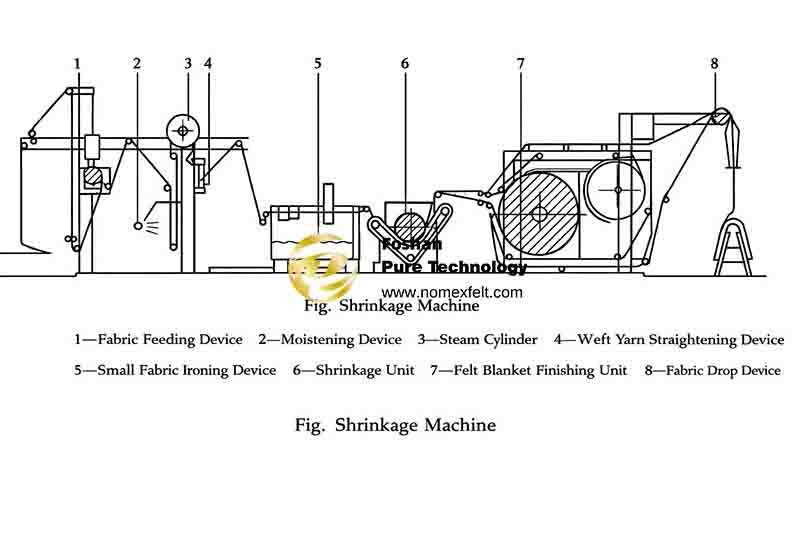
Compactor Machine Felt plays a key role in textile finishing, especially during pre-shrinking. Without proper compaction, fabrics—particularly cotton knits—can shrink unpredictably after washing.
1. Pre-shrinking Fabrics: In garments like T-shirts or polo shirts, the felt applies controlled compression to reduce residual shrinkage before sewing. That helps keep sizing more consistent. Of course, machine settings still matter, but stabilizing the fabric early makes a noticeable difference.
2. Dimensional Stability: Beyond shrinkage control, dimensional stability improves as well. Fabrics that have been properly compacted are less likely to distort during cutting or heat setting. I wouldn’t say it solves every issue—but it certainly reduces unexpected variation.
3. Fabric Quality Enhancement: The finishing effect is also noticeable. The compaction process can enhance fabric softness and surface smoothness, giving knitted materials a cleaner, more refined appearance. You know, sometimes the difference is subtle, but in garment production, even small improvements matter.
4. Customization: And since different fabrics behave differently, felt thickness and density can be adjusted to match specific production needs.
Overall, Compacting Felt helps maintain shrinkage control, fabric quality, and production consistency—something most finishing lines simply can’t ignore.
If you’ve worked with compacting machines before, you’ll know this—felt quality really shows up in production. On paper, many Compactor Felts look similar. But last year, when I tested two different grades in a finishing line, the difference became obvious after continuous high-temperature runs. The lower-grade felt started to harden, while the higher Nomex-content one kept its structure stable. That directly affected shrinkage consistency.
High-quality felts are usually made from Nomex, polyester, or wool blends, mainly because compacting temperatures can go up to 280°C. Under that kind of heat, weaker materials simply don’t last. A good felt maintains tension, surface condition, and compression performance over time.
Durability also matters more than many people think. Some premium felts can operate for around 6000 hours. Of course, that depends on machine settings—but fewer replacements mean fewer production stops. And honestly, that’s where the real cost savings happen.
Another thing I noticed when speaking with a finishing manager recently—once they upgraded to a higher-density felt, edge-to-center shrinkage variation improved significantly. That kind of uniformity makes a difference in garment sizing consistency.
So yes, high-quality Compactor endless felt may cost more upfront. But in terms of dimensional stability, smoother fabric feel, and fewer production headaches, it usually proves to be the smarter long-term choice. Regular inspection of felt surface glazing and tension consistency can extend service life by 10–15%.
| Parameter |
Typical Range |
|
|
Material |
Nomex / Polyester / Wool |
|
|
Working Temperature |
100%Nomex |
230℃-Compacting machines |
|
50%Nomex+50%Polyester |
200℃-Compacting machines |
|
|
30%Nomex+70%Polyester |
160℃-Compacting machines |
|
|
100%Polyester |
160℃-Compacting machines |
|
|
Thickness |
18–21 mm |
|
|
Width |
600mm~3800mm, OEM |
|
|
Inner circumference |
1200mm~30000mm, OEM |
|
|
Service Life |
~6000 hours |
|
Choosing the right Nomex Compactor Felt isn’t just a technical decision—it directly affects shrinkage control and production stability.
I realized this more clearly last year when I visited a knitting mill that was struggling with uneven shrinkage. At first, they thought it was a machine issue. Later, after testing a different felt specification, the results improved significantly. That experience changed how I look at felt selection.
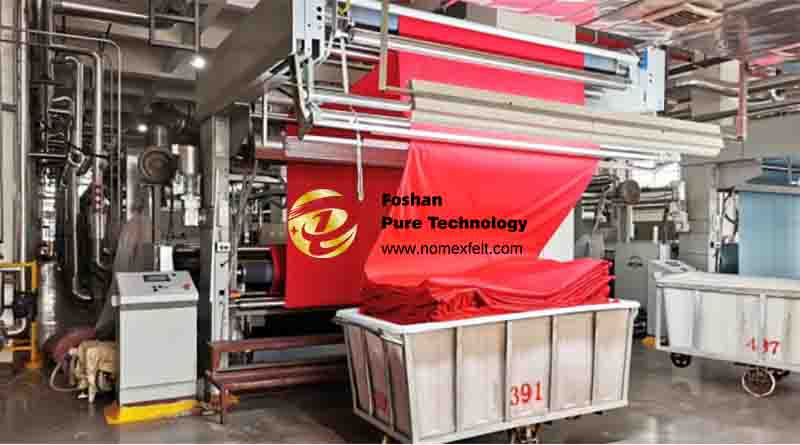
Fabric type really matters. Knitted fabrics behave very differently from woven fabrics, and blended materials can react unpredictably under heat and compression. The felt’s thickness, density, and material composition—whether it’s Nomex, polyester, or wool—should match the fabric structure. Of course, this sounds obvious. But in reality, many mills still use one standard felt for everything. Sometimes it works. Sometimes… not so much.
Machine compatibility is another detail people overlook. I once spoke with a technician who installed a felt that technically “fit,” but couldn’t handle the machine’s operating temperature.
When you’re running at up to 280°C, especially on thermo-oil heated compactors, Nomex-based felts tend to perform more reliably. Based on field performance, high-quality compacted felts are widely used in compacting machines from FERRARO, SANTEX, MONFORTS, and other leading European manufacturers. That compatibility isn’t accidental—it’s based on long-term application results.
Durability also plays a bigger role than people expect. A good felt can operate around 6000 hours, depending on conditions. Now, of course, that depends on maintenance and machine settings—but fewer replacements mean fewer production stops. And fewer stops usually translate into better cost efficiency over time.
Shrinkage control is where things get interesting. For garment manufacturers, even small variations between the center and edge of the fabric roll can cause sizing inconsistencies later.
A well-engineered felt provides balanced compression and heat distribution. That balance is what helps maintain dimensional stability while preserving fabric handle. At least, that’s what I’ve consistently observed in mills running higher-spec felts.
Customization is another angle worth considering. Different fabrics—and different production targets—may require adjustments in felt thickness or surface treatment. Some suppliers offer that flexibility, and honestly, that’s often where performance optimization happens.
Yes, higher-quality Compactor Felt usually comes with a higher upfront cost. But, honestly, the longer lifespan and more stable shrinkage control often make up for it over time.
Downtime and uneven results can cost more than people expect. Of course, every setup is different—but from what I’ve seen, investing in the right felt early usually prevents bigger issues later.
Yes. Compactor Felt can be customized in terms of thickness, density, and surface treatment to suit different fabric types, machine settings, and shrinkage requirements.
Compactor Felt is typically made from heat-resistant materials such as Nomex, polyester, and wool. These materials are selected for their ability to withstand high temperatures and pressure during the compaction process.
Selection should be based on fabric type, machine specifications, and required shrinkage control. Make sure the felt matches your machine’s operating temperature and pressure conditions to ensure optimal performance.
Looking for high-performance Compactor Felt compatible with FERRARO or SANTEX machines?
Contact our technical team for specification matching support.
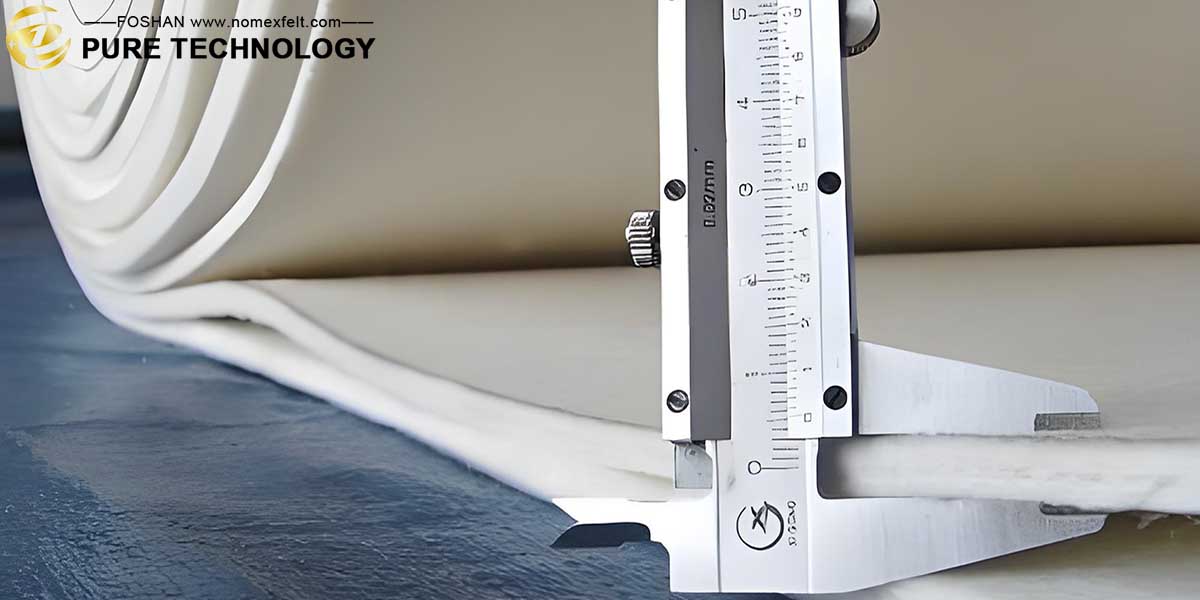
As we know, Heat Transfer Printing Felt is suitable for fabrics, decorative fabrics, curtains, le...

Read Safety Rules for Laundry Management to be a qualified manager. PARTⅠ Laundry room Safety Gen...
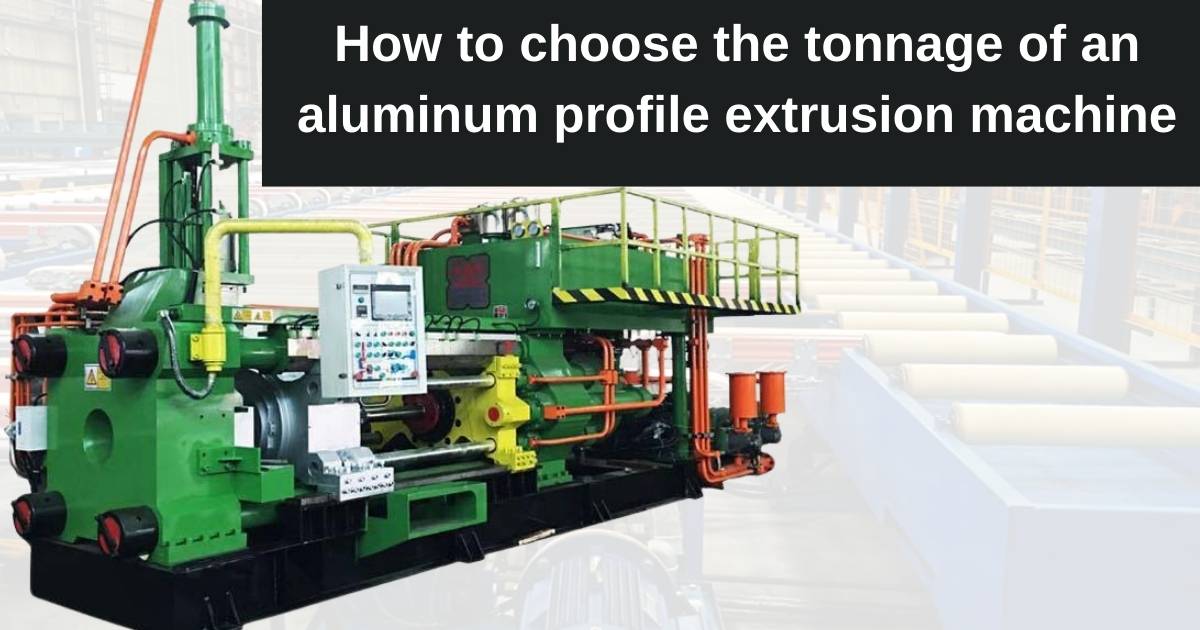
The aluminum extrusion machine is the leading equipment for the production of aluminum profiles. ...
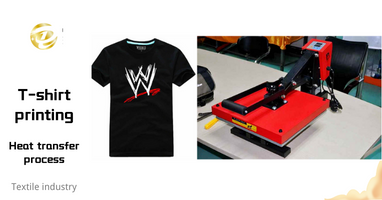
Heat transfer printing is a contemporary printing process in the clothing market. It prints the p...
In the textile industry, felt is only a small part but important. About how to choose felt that i...
Foshan Pure Technology Company., Ltd. helps conveyor belt manufacturers source equipment to metal...
What is Nomex? Meta-amide, or meta-phenylene isophthalamide, is made from meta-phenylenediamine a...
Kevlar fiber Introduction In the development of materials science, Kevlar fiber has particularly ...