Conveyor belts are a product of modern industrial development. As components connecting production stages in modern industrial production, they play an irreplaceable role in transmission systems.
These spare parts are most commonly used in the aluminum, textile, laundry, and steel industries. They help improve production efficiency and reduce the associated costs of efficient, continuous material transport.
Conveyor belts are moving bands that transport items from one place to another. Widely used in the market, conveyor belts come in many types and materials.
Different materials give conveyor belts different properties, while surface coatings or coverings determine their friction properties, temperature resistance, and durability.
This makes industrial conveyor belts suitable for everything from on-site transportation in mines and material handling in production processes to the transfer of lightweight items within precision machinery and the fixing of components.
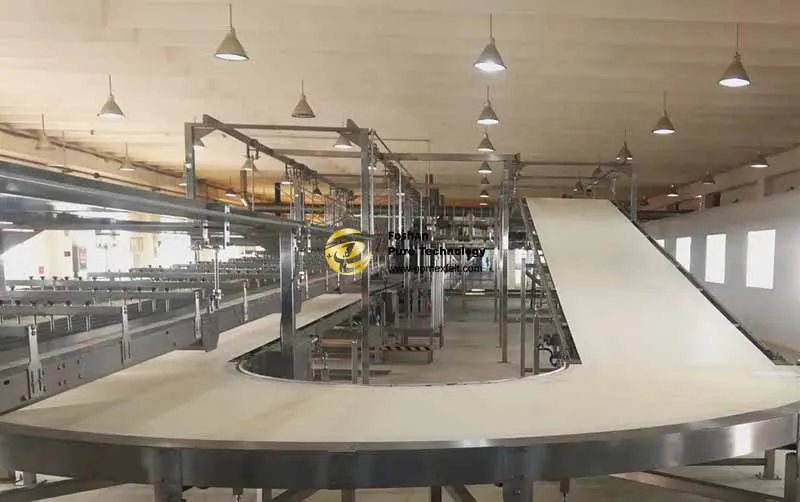
PVC Conveyor Belts
PVC conveyor belts are one of the most widely used types of conveyor belts. Their rubber outer layer is made of polyvinyl chloride, typically a mixture of polyester fiber fabric and PVC rubber.
The surface of the conveyor belt is a smooth PVC rubber layer, while the bottom is a conductive fiber braid. Due to its good elasticity, it is not easily deformed, runs smoothly, is not prone to deviation, has strong joints, and good lateral stability.
PU Conveyor Belt
PU conveyor belts use specially treated high-strength synthetic polyurethane fabric as the load-bearing skeleton, and the coating is made of polyurethane resin. In addition to the high tensile strength, good flexibility, light weight, thinness, and toughness of ordinary conveyor belts, it also has corrosion resistance, cold resistance, cut resistance, wear resistance, and physical aging resistance, making it a durable conveyor product.
PE Conveyor Belt
Polyethylene is a widely used plastic material. It is soft but tough, corrosion-proof chemically (particularly against acid and alkalies), an electrical insulator, and a low-friction material. It is cheap. LDPE is more elastic with greater transparency than polyethylene, whereas HDPE is more rigid with greater hardness than polyethylene.
High-Performance Fibers
High Performance Fibers High-performance fibers (Nomex, Kevlar, PBO) are produced in a different way than conventional synthetic fibers. Based on high-performance fibers used as a reinforcing agent, composite materials produced with thermoplastic resin and thermosetting resins, along with different types of woven fabrics, are very much in use in different applications.
From an engineering perspective, no single material can satisfy all industrial conveying requirements.
Effective conveyor belt design always involves a balanced combination of reinforcement structure and surface material, matched to actual operating conditions rather than nominal specifications.
Conveyor belts are also classified according to their surface materials and functions. The surface determines how the conveyor belt interacts with the conveyed material.
Common surface types include:
Rubber-coated conveyor belts are used to enhance grip and durability
Silicone conveyor belts are used to prevent sticking and provide heat resistance
PU or PVC conveyor belts, used for clean, low-friction applications
Felt conveyor belts are used to absorb pressure and protect surfaces
Each surface type has its own distinct industrial application; therefore, proper classification is crucial for stable operation.
Industrial conveyor belts should be selected based on process conditions, not product categories.
The textile processing environment also poses heat, moisture, chemicals, and cyclic stress to the conveyor belt materials. In textile finishing, pressure uniformity is more critical than tensile strength alone.
Applications such as heat transfer printing, compaction, and finishing also require a constant thickness of the conveyor belt to ensure a certain pressure is constantly applied throughout the entire production process.
From the technological information provided by textile manufacturing machine vendors, felt conveyor belts are estimated to cut defects by 15% to 25% when compared with rubber conveyor belts in finishing compaction machines.
The temperature range of silicone conveyor belts is between 60°C to 200°C, in addition to characteristics such as insulation, oxidation resistance, weather resistance, resistance to high temperatures, and resistance to sticking. They also exhibit strength, hardness, resistance to cuts, resistance to acids, and resistance to alkalis.
These blankets have a high degree of tearing resistance, crack resistance, elongation resistance, abrasion resistance, heat resistance, and chemical resistance. The rubbery texture of these blankets provides overall friction to the fabric and a smooth shrinkage process without any marks or wrinkles.
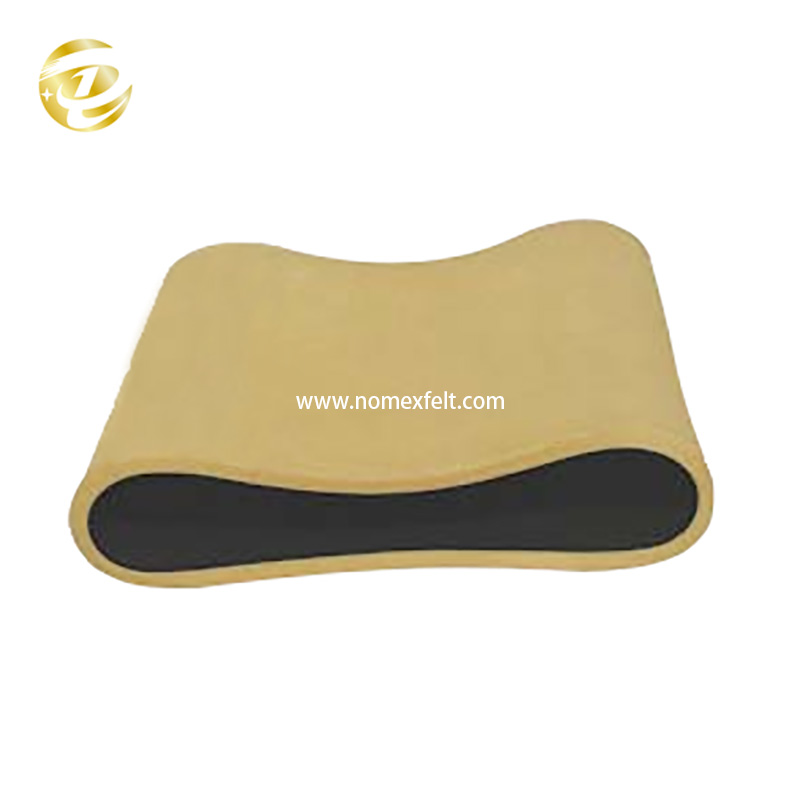
Heat transfer felt is an industrial material specifically designed for heat transfer processes. It possesses good thermal stability and surface smoothness. Its main applications are concentrated in heat transfer technology, serving as conveyor supports or clamping components to ensure the efficiency and precision of the transfer process. For example, in roller heat transfer machines, felt belts serve as a conveyor medium, carrying the substrate through heating elements to achieve precise pattern transfer.
During aluminum extrusion processes, the temperature of the aluminum profiles extruded from the die may exceed 500°C, resulting in a surface of the extruded aluminum profiles that is very soft and fragile.
In aluminum extrusion, heat resistance and surface protection outweigh cost considerations. Conventional materials, such as graphite plates, sometimes present a challenge due to scratches on the surface or carbon contamination.
“Felt conveyor belts” had become the system of choice for contemporary aluminum extrusion production plants because of their following characteristics: they offered a soft contact surface, were capable of handling high temperatures, and did not generate graphite dust contamination.
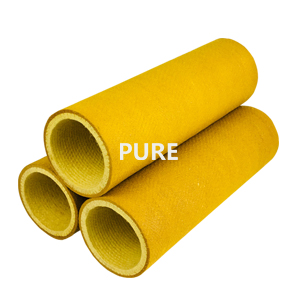
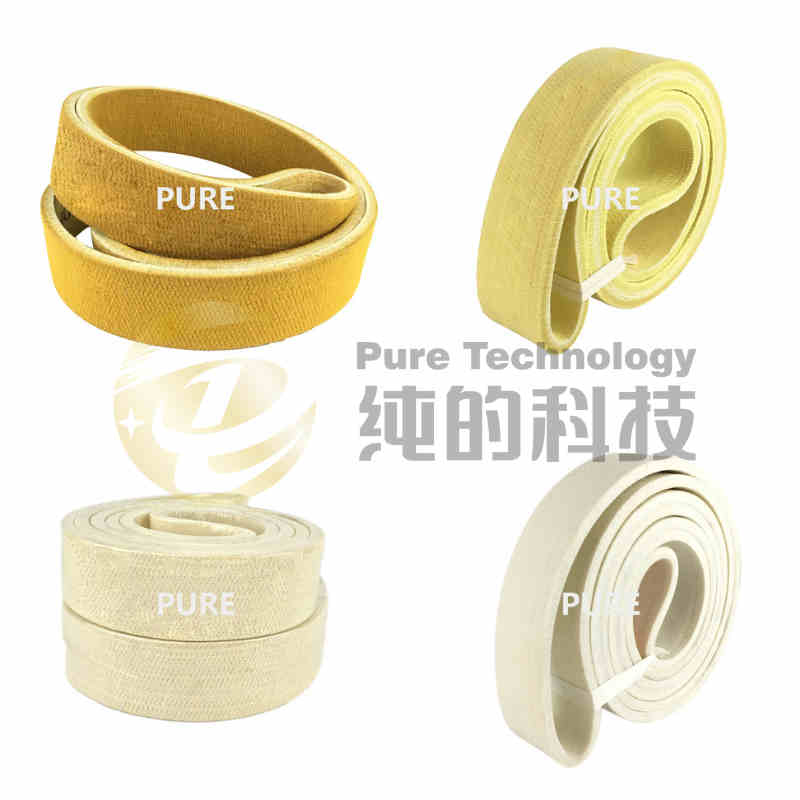
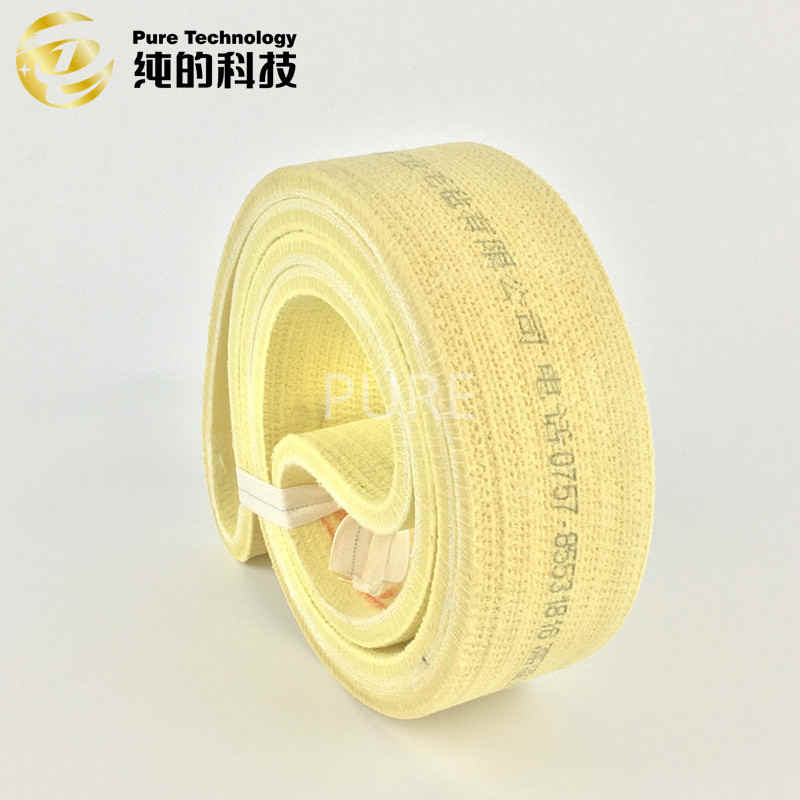
Endless felt belts are made of high-strength fibers such as PBO, Kevlar, and Nomex, having a temperature resistance of up to 600°centigrade, used in scenarios involving high temperatures after aluminum extrusion.
PBO Felt Belt: Maximum temperature: Short term (15 minutes) 600˚C, Long term 550˚C. Mainly used for discharge/cooling stations (High temperature
Kevlar Felt Belt: Short term: 15 minutes @ 480°C; Long term: 200°C. Use only in unloading and cooling platforms(medium-temperature zone).
Nomex Felt belt: Temperature resistance ≤280℃, only suitable for use after stretch conveyors (medium temperature range).
Polyester Felt belt: Temperature resistance ≤180℃, suitable for storage table saws, anodizing and painting loading/unloading lines (normal temperature zone).
In aluminum extrusion, felt conveyor belts are not selected primarily for comfort or softness, but for controlled heat resistance, abrasion behavior, and contamination prevention under continuous thermal load.
All temperature ranges and performance values mentioned in this article represent typical industrial operating conditions rather than laboratory maximum limits. Actual performance depends on belt structure, fiber composition, equipment design, and maintenance practices.
Selecting industrial conveyor belts requires evaluating several key performance indicators (KPIs):
Operating temperature range
Tensile strength and elongation
Abrasion resistance
Fatigue life
Maintenance has a direct impact on the life of a conveyor belt. Additionally, appropriate maintenance can increase the life of a conveyor belt. Regular maintenance prevents scratches on aluminum profiles and ensures that the transfer of printed materials to fabric is smooth and that the fabric remains smooth and wrinkle-free.
According to maintenance studies referenced by the Industrial Maintenance Association, preventive maintenance practices such as proper tensioning, alignment, and cleaning can extend conveyor belt service life by approximately 30–50%.
Choosing the right conveyor belt starts with a clear understanding of the process flow, rather than just focusing on the product name.
Key questions are:
What is the operating temperature?
How long is the service life of a conveyor belt?
What is the process of manufacturing?
How long will delivery take?
Textile finishing requires priority for either pressure equality and cleanliness of the belt, while aluminum extrusion requires priority for heat resistance and wear resistance.
Q: Is it possible to use one conveyor belt in several processes?
A: In most instances, no. The choice of a conveyor belt should be based on production needs rather than a specification.
Q: Can conveyor belts be customized?
A: Yes. Industrial conveyor belts are commonly customized based on process temperature, load, and equipment layout, rather than standardized dimensions alone.
Q: What is the make conveyor felt belt process?
A: Screening → Carding → Weaving • Laying → Hardening → Cutting → Inspection.
Within the textile industry and aluminum processing sector, there is an increasing trend in utilizing process-oriented conveyor belt solutions, most probably due to higher demands for accuracy, reliability, and long-term functionality.
By recognizing materials, design, and practical operating parameters, it is possible to identify and apply conveyor belts not only for transporting products but for facilitating entire production processes.
We offer specialized felt conveyor belts made from PBO fiber, Kevlar®, Nomex®, and polyester fibers, catering to diverse temperature ranges, load conditions, and surface protection requirements.
If you are planning a new production line, upgrading existing equipment, or encountering issues such as surface defects, conveyor belt wear, or instability, please feel free to contact us for technical consultation and product recommendations. Our team will help you find the most suitable felt conveyor belt solution for your application.
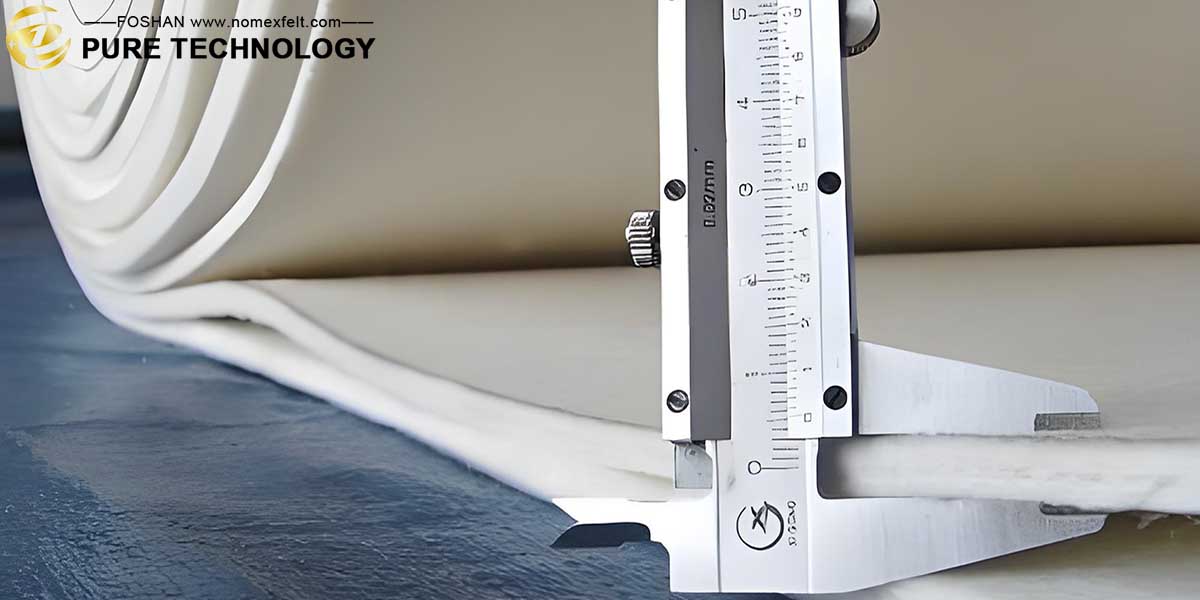
As we know, Heat Transfer Printing Felt is suitable for fabrics, decorative fabrics, curtains, le...

Read Safety Rules for Laundry Management to be a qualified manager. PARTⅠ Laundry room Safety Gen...
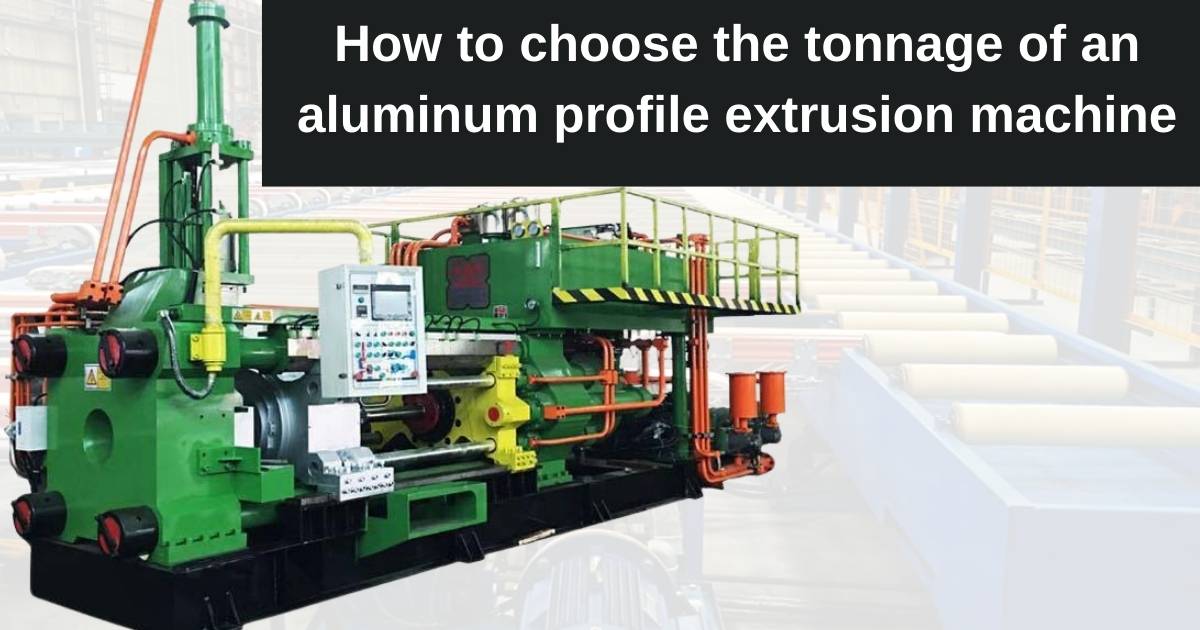
The aluminum extrusion machine is the leading equipment for the production of aluminum profiles. ...
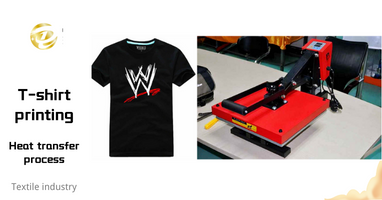
Heat transfer printing is a contemporary printing process in the clothing market. It prints the p...
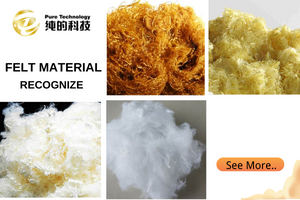
In the textile industry, felt is only a small part but important. About how to choose felt that i...
Foshan Pure Technology Company., Ltd. helps conveyor belt manufacturers source equipment to metal...
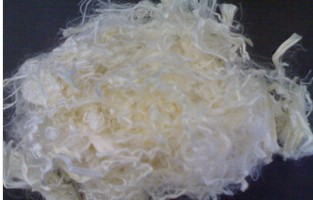
What is Nomex? Meta-amide, or meta-phenylene isophthalamide, is made from meta-phenylenediamine a...
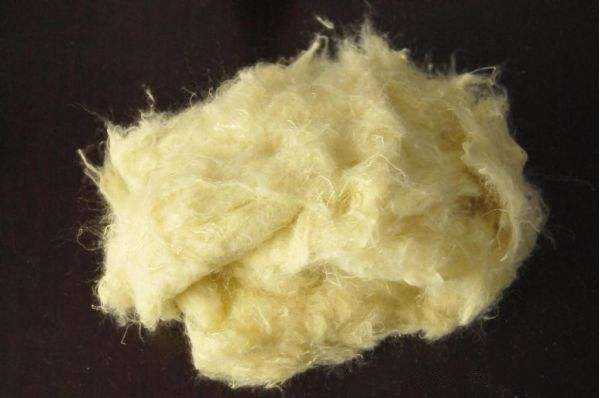
Kevlar fiber Introduction In the development of materials science, Kevlar fiber has particularly ...